

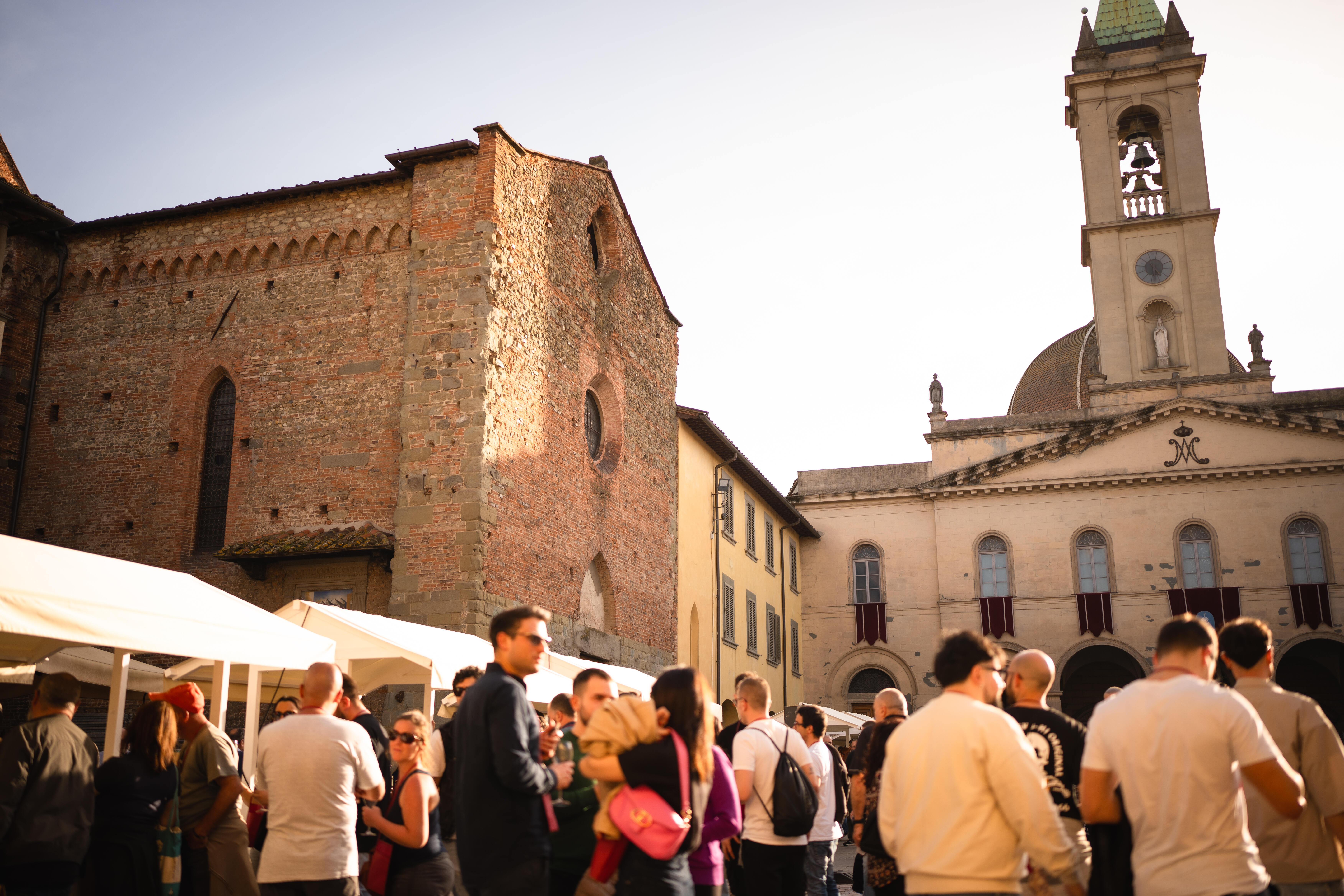
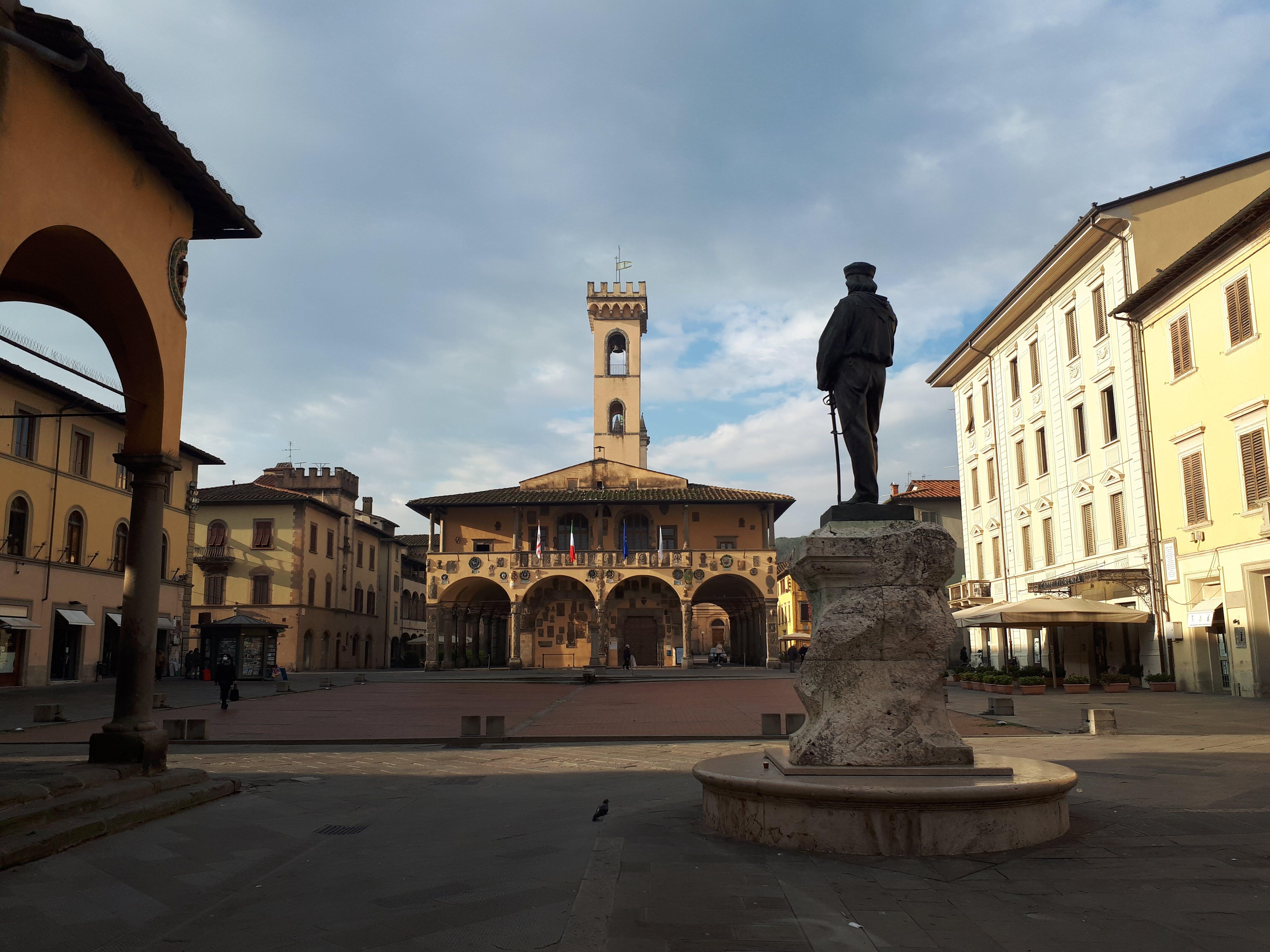
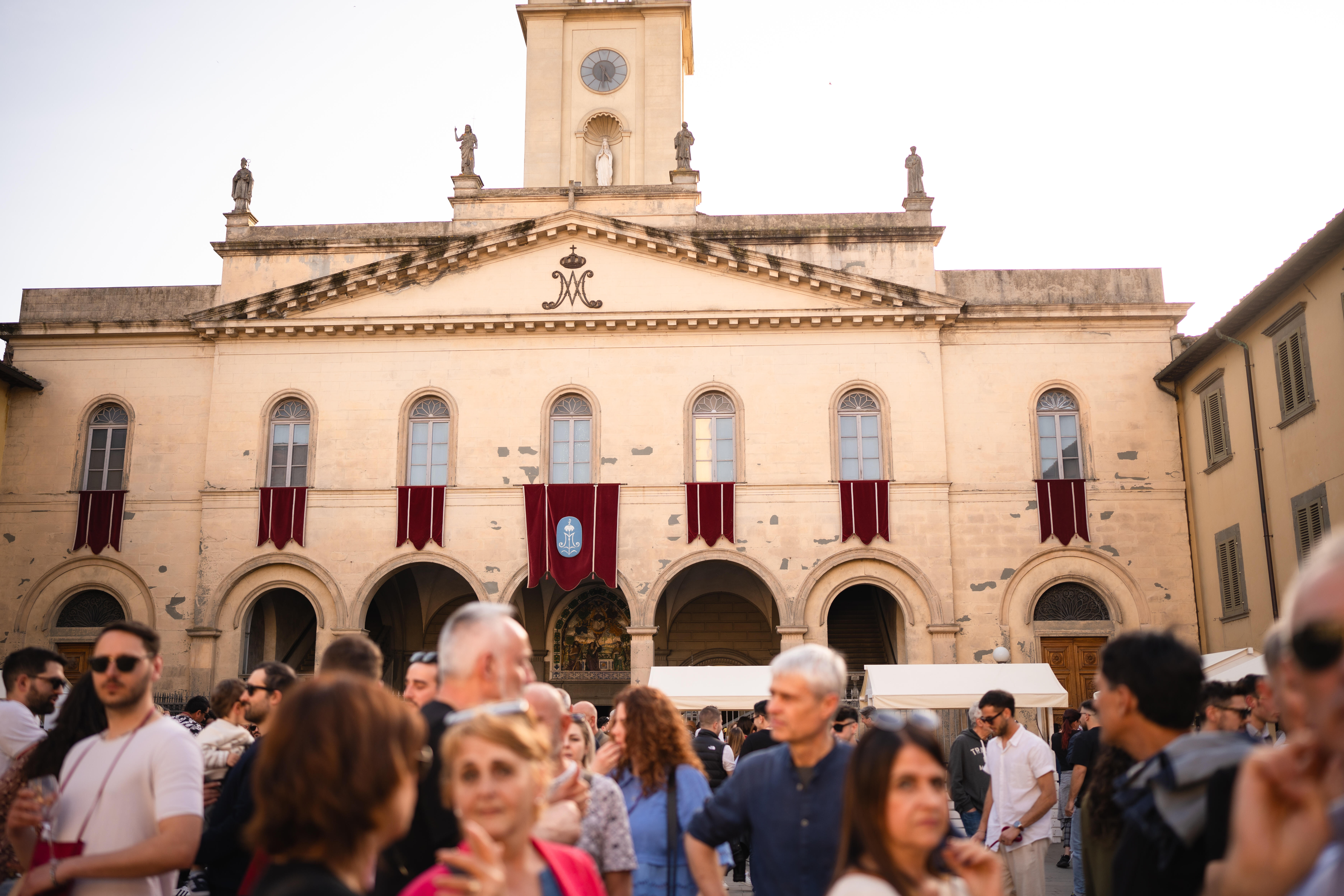
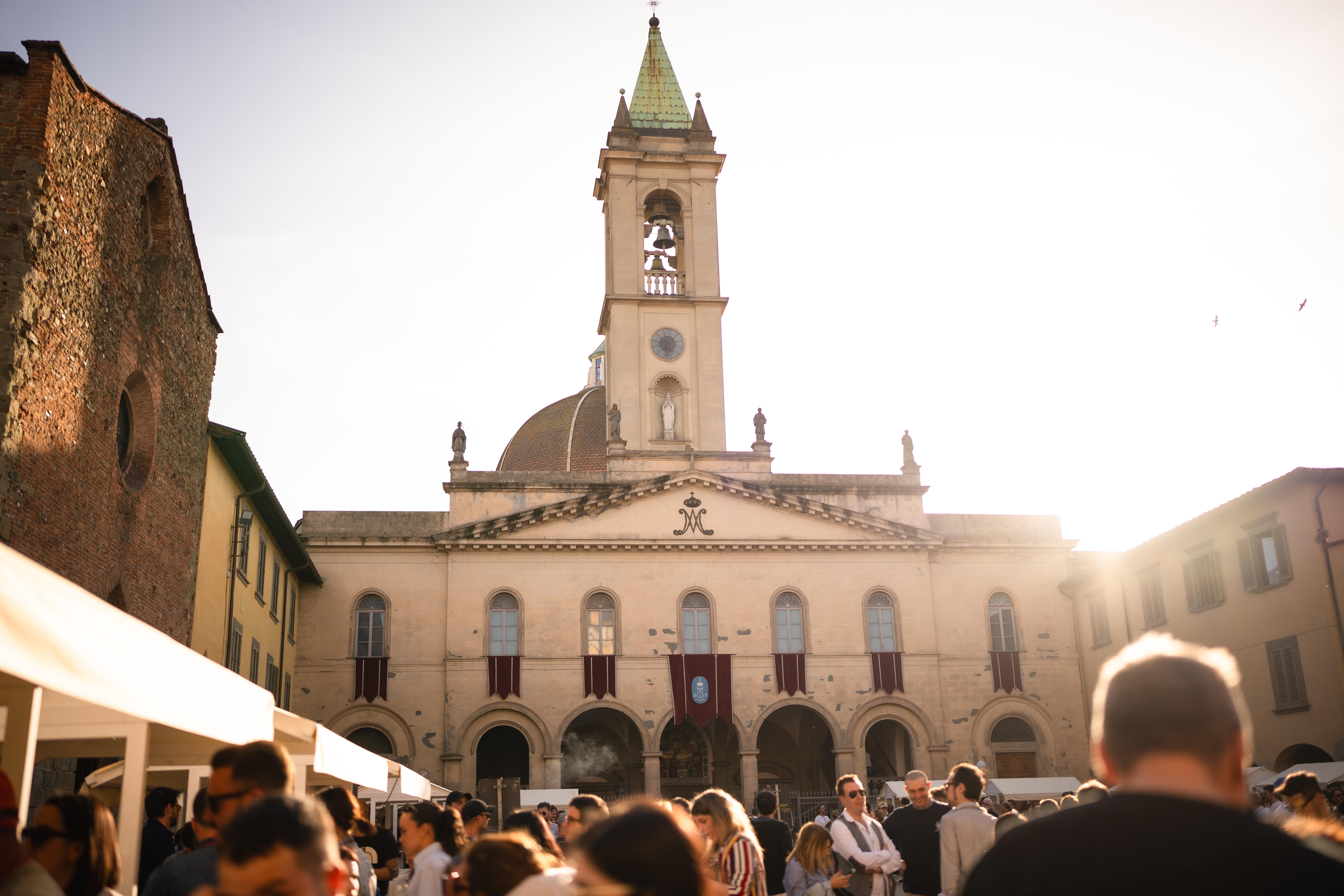
The Marian Sanctuary of Maria Santissima delle Grazie a San Giovanni Valdarno is an important site of faith and culture located along the ancient walls of the city, where once stood Porta San Lorenzo.
History and legend of the Sanctuary of Maria Santissima delle Grazie
Where today stands the basilica, once stood Porta San Lorenzo, decorated with a fresco depicting the Madonna with the Child and Saints. During the plague epidemic of 1478, Monna Tancia, an old woman from San Giovanni, prayed to Our Lady to save her nephew Lorenzo, who was orphaned and rejected by the balie for fear of contagion. Her prayers were answered: during the night, she saw the milk pour out of her breast to feed the baby. The news of the prodigy spread quickly beyond local borders, spurring a deep devotion to Mary Most Holy of Graces.
Architectural and Artistic Evolution
Originally, the place served as a city gate, then equipped with a wooden tabernacle dedicated to the miraculous image. Later, in 1484, it was transformed into a real oratory with an elevated chapel. The church was completed in the twenties of the sixteenth century and over the centuries has undergone numerous decorative interventions thanks to the devotion of the faithful. Today, the sanctuary is a fascinating example of artistic evolution ranging from the Renaissance to the twentieth century.
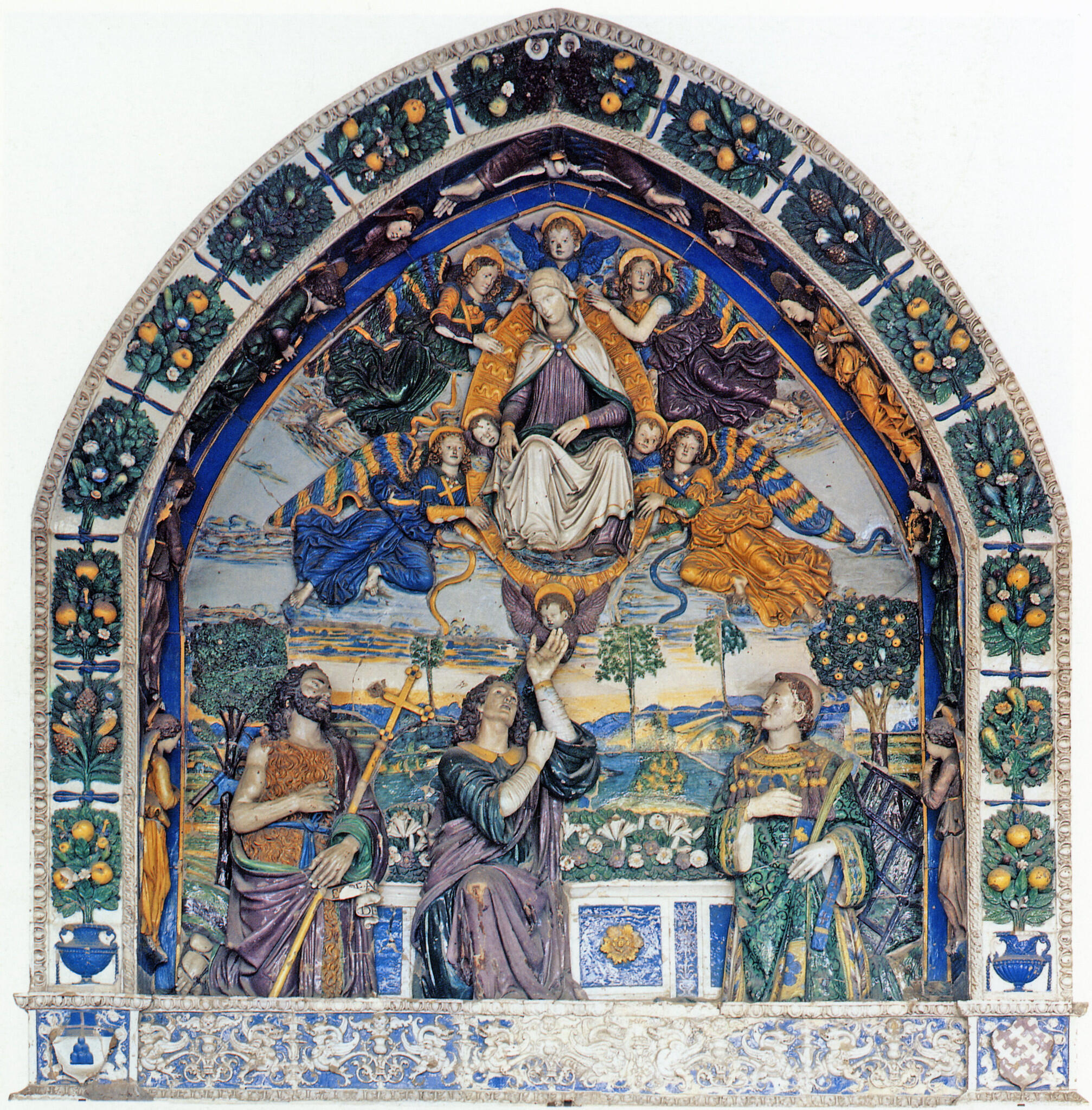
The lunette of the basilica
The extraordinary lunette placed above the gate of Porta San Lorenzo in the basilica of Santa Maria delle Grazie was built between 1510 and 1513 by Giovanni della Robbia. Commissioned by Giannozzo Salviati, vicar of Castel San Giovanni (now San Giovanni Valdarno), this work depicts the Virgin Mary dressed in a purple robe and a white cloak symbol of purity, supported by joyful angels. At the center of the opera is Saint Thomas who receives the waist, symbol of his faith (now lost probably due to the bombing of 1944), while on the sides of the composition are represented the patron saints of the city: on the left Saint John the Baptist with the cross and the cartouche "Ecce Agnus Dei", and on the right San Lorenzo with the palm of martyrdom, both arranged symmetrically.




















Viedisangiovanni.it is a new digital network bringing innovation into tourism: places of interest, experiences and accommodations in a new digital connection of geolocated information.




What is the MyPlace
Explore from the selected location.